Powered by the Rotax 916 iS, Carbon Cub UL N21UL flies 6,900 nautical miles from Idaho to Poland
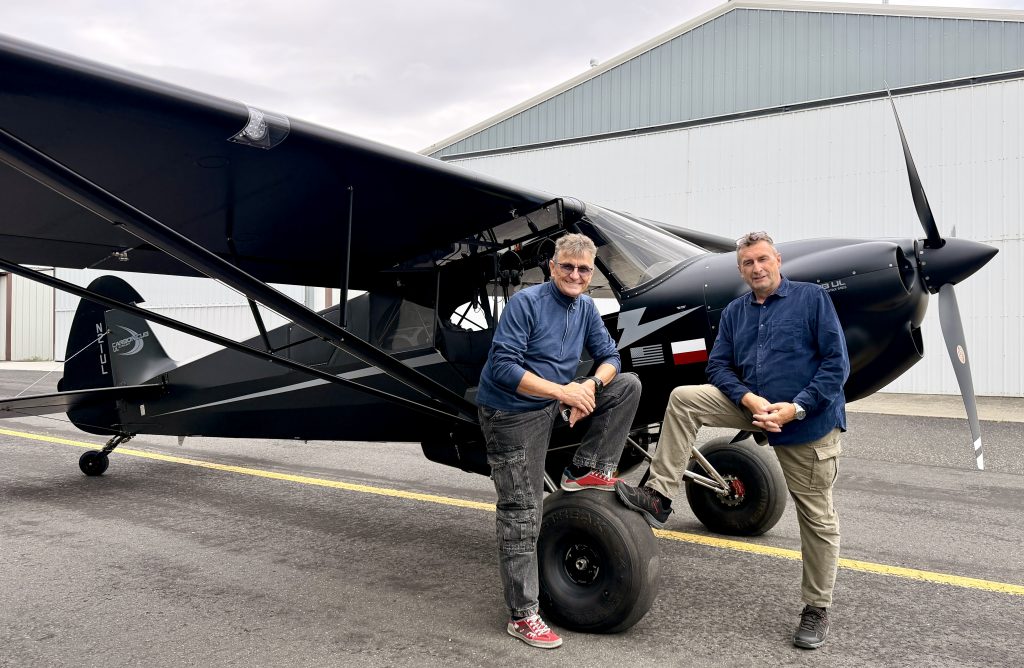
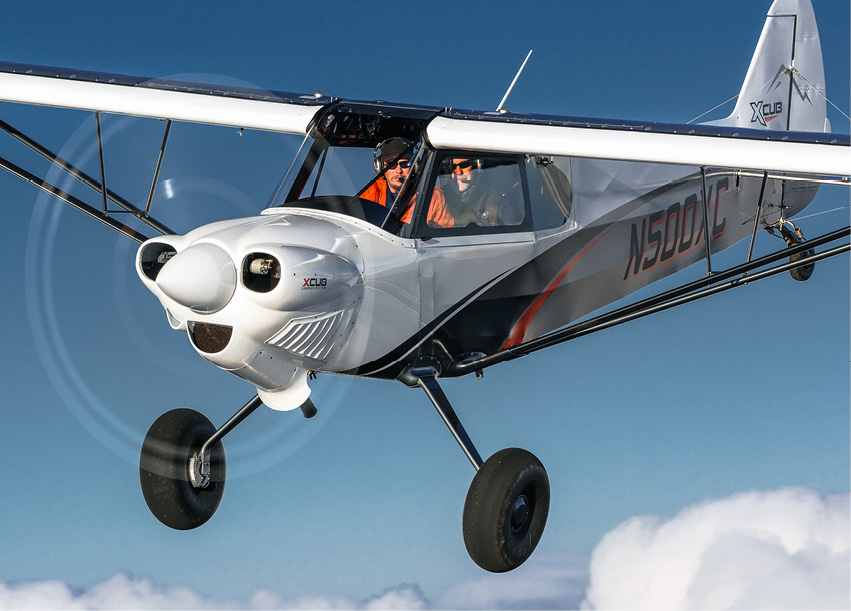
Owner Zbigniew Dziubas (left) and pilot Gabriel Batkiewicz (right) in Lewiston, Idaho – photo by Tyler Peters
Yakima, Washington – [July 17, 2026] — CubCrafters is celebrating another milestone in Carbon Cub history following the successful completion of the first transatlantic flight by a Carbon Cub UL. Rather than disassembling and shipping the aircraft to Poland, the owner chose to fly it home, demonstrating the Carbon Cub UL’s remarkable efficiency, reliability, and adventure-ready capability over one of general aviation’s most demanding ferry routes.
Carbon Cub UL N21UL departed Lewiston, Idaho, after delivery to its new owner, Zbigniew Dziubas, with Gabriel Batkiewicz serving as the expedition’s pilot. Over the course of 94.5 flight hours, the aircraft traveled approximately 6,900 nautical miles, crossing the United States, Canada, Greenland, Iceland, the United Kingdom, the Netherlands, the Czech Republic, and ultimately arriving safely in Poland.
The journey required meticulous planning, patience, and disciplined aeronautical decision-making while operating through remote terrain, rapidly changing weather, and long overwater crossings. Before departing Canada for the North Atlantic crossing, the aircraft had its first 25-hour oil change.
Weather played a significant role throughout the expedition. Favorable conditions allowed the Carbon Cub UL to cruise over the Greenland Ice Cap at Flight Level 120, while strong winds delayed departure from Greenland before the crossing to Iceland. Earlier in the trip, deteriorating weather in Canada required a diversion to a planned alternate airport, reinforcing the crew’s commitment to conservative decision-making and safety.
To complete the longest overwater segment, the aircraft was equipped with an auxiliary belly pod carrying an additional 25 gallons of fuel, increasing total fuel capacity to 69 gallons. While it is possible to cross the Atlantic by making an additional stop in the Faroe Islands, that route often presents strong winds, moderate turbulence, and operational challenges. The additional fuel allowed the crew to bypass the Faroe Islands and fly directly from Reykjavík, Iceland (BIRK) to Wick, Scotland (EGPC).
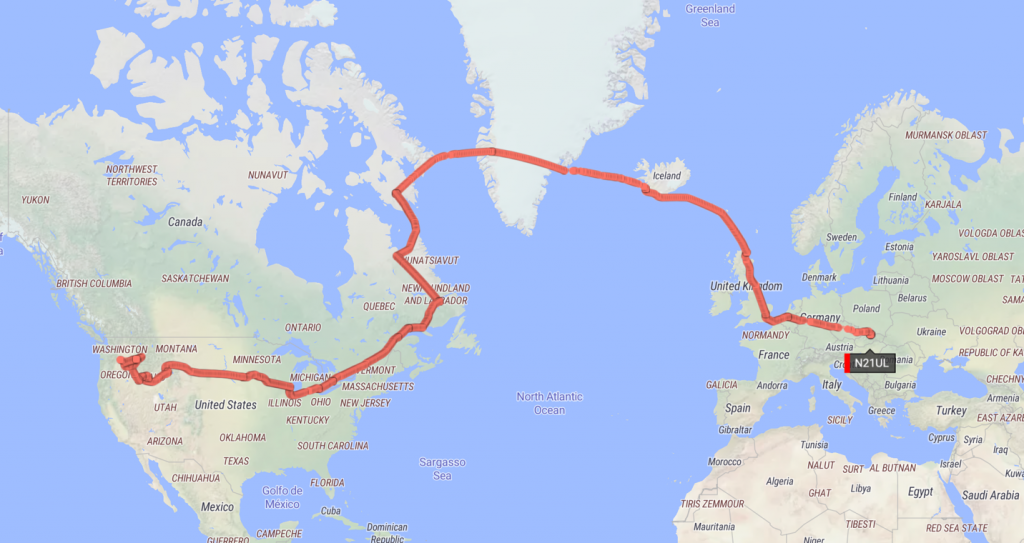
Pilot Gabriel Batkiewicz’s Satellite Tracker Data of N21UL’s Flight Route to Poland
The longest leg of the journey covered 695 nautical miles in 6 hours and 58 minutes, consuming 158 liters (41.7 U.S. gallons) of fuel. Throughout much of the expedition, the Carbon Cub UL cruised at approximately 5,200 RPM and 32 inches of manifold pressure, averaging just 21.5 to 22.0 liters per hour (5.7 to 5.8 U.S. gallons per hour). Average true airspeed ranged between 97 and 100 mph, depending on weather conditions and winds.
Powering the Carbon Cub UL was the turbocharged Rotax 916 iS engine. Its FADEC-controlled fuel injection, turbocharging, and exceptional fuel efficiency enabled the aircraft to perform consistently from low-altitude cruising across North America to operations at Flight Level 120 over Greenland. Throughout the expedition, the Rotax 916 iS delivered the reliability, efficiency, and smooth operation required for nearly 95 hours of international flying.
“The airplane pleasantly surprised me,” said Gabriel Batkiewicz, pilot of the expedition. “The engine ran beautifully and the aircraft was stable throughout the journey. I was skeptical of the Rotax engine before this trip, but after flying it across the Atlantic, I’ve completely changed my opinion. Every leg required careful planning, weather analysis, and fuel management, but the aircraft performed exceptionally throughout the entire journey.”
For the extended overwater crossings, the Carbon Cub UL was equipped with immersion suits, life jackets, a life raft, satellite tracking equipment, and emergency communication devices. Alternate airports were continuously evaluated throughout the journey, with every weather-related decision favoring safety over schedule.
“Flying a brand-new Carbon Cub UL from the United States to Poland is an incredible accomplishment and a testament to Gabriel Batkiewicz’s planning, decision-making, and piloting skills,” said Brad Damm, Vice President of Sales & Marketing for CubCrafters. “It’s also an outstanding demonstration of the Carbon Cub UL’s efficiency, reliability, and capability. Averaging less than six gallons of fuel per hour while crossing some of the most remote terrain and water on Earth speaks volumes about both the aircraft and the turbocharged Rotax 916 iS powerplant. We’re excited to see another Carbon Cub UL begin its next adventure in Europe.”
The successful transatlantic delivery highlights the growing international presence of the Carbon Cub UL and demonstrates the confidence owners around the world have in the aircraft. From the mountains of Idaho to the North Atlantic and ultimately Poland, the journey showcased the Carbon Cub UL’s ability to combine exceptional backcountry performance with the efficiency, reliability, and range needed for extraordinary international adventures.
Flight by the Numbers
- Aircraft: Carbon Cub UL N21UL
- Engine: Rotax 916 iS turbocharged
- Owner: Zbigniew Dziubas
- Pilot: Gabriel Batkiewicz
- Distance: Approximately 6,900 nautical miles
- Flight Time: 94.5 hours
- Longest Leg: 695 nautical miles
- Longest Flight: 6 hours, 58 minutes
- Fuel Capacity: 69 gallons (44 gallon wing tanks and 25 gallon auxiliary belly pod)
- Average Fuel Burn: 21.5–22.0 L/hr (5.7–5.8 U.S. gal/hr)
- Average True Airspeed: 97–100 mph
Route
- KLWS – KMAN – U88 – U87 – KWYS – KMDS – KBUU – KHAI – KDET (USA
- CYKF – CSE4 – CYBC – CYGV – CYYR – CYFP – CYFB. (Canada)
- BGSF – BKGG (Greenland)
- BIRK (Iceland)
- EGPC – 01EG – EGSL (UK)
- EHSE – LKLT – EPNT (Belgium, Netherlands, Germany, Czech Republic, Poland)
About CubCrafters
Founded in 1980 by Jim Richmond, CubCrafters has its roots in classic grassroots aviation history while delivering modern, innovative aircraft. We design and manufacture Experimental, LSA, and Certified planes known for exceptional backcountry performance. Our Carbon Cub family redefines the flying experience with advanced materials, powerful engines, and modern design. The flagship XCub expands backcountry capability with greater speed, range, and payload than others in its class. We modernize classic aircraft designs with cutting-edge engineering, lighter composites, upgraded avionics, and improved safety—combining tradition with top-tier performance. Our newest UL-class aircraft brings next-gen engine and airframe tech to the field, minimizing environmental impact without sacrificing capability. The key to our success is delivering unmatched value in personal adventure aviation.
For more information about CubCrafters, visit our website at: www.cubcrafters.com
[…] Titel-Bild von Tyler Peters/CubCrafters zeigt den Eigentümer Zbigniew Dziubas (links) und den Piloten Gabriel Batkiewicz (rechts) vor der […]